
Odessa Storm Damage
Severe hail and wind storms compromise roofing systems, allowing water penetration that soaks attic insulation and ceiling fixtures. Desert cloudbursts across the local basin push sudden surface runoff against slab foundations, requiring rapid extraction and perimeter drying before water wicks into baseboards. Our dedicated technicians arrive quickly to halt structural deterioration and restore your property.
Ceiling sagging? Call (432) 555-0169.
Prefer to talk? (432) 555-0169
Affordable Storm Water Damage Restoration
As documented in trade analyses, rainfall rates of 2 to 4 inches per hour quickly exceed local surface drainage capacity, causing rapid roadway pooling and building water ingress within minutes.
Homeowners often describe how overnight flash flooding conceals rising floodwaters from property owners, delaying emergency shutoffs and allowing prolonged moisture penetration into wall cavities.
A pattern echoed in public discussions is how severe hail and wind storms compromise roofing systems, allowing water penetration that soaks attic insulation and ceiling fixtures.
Hail activity around the local basin is uneven year to year: 2023 logged 596 radar signatures while 2022 logged only 132, a 4.5x spread.
Comparing the two halves of 2021-2025 across the regional sector, radar hail signatures went from 562 to 795, representing a rise of 41%.
The median owner-occupied home across this region was built in 1977 according to Census ACS 5-year records.
The surrounding community has 47,825 housing units on record in the Census ACS 5-year estimates.
About 25% of housing units locally (11,807 of 47,825) were built since 2000, so a substantial share of the local stock is still on its original systems.
When severe weather strikes, our certified technicians deliver comprehensive emergency water damage restoration across the region to protect your investment.
During comprehensive structural inspections, homeowners often describe how they detect warm floor spots and spinning water meters, facing difficult decisions between invasive slab jackhammering and whole-house overhead repiping.
Our technicians prioritize non-invasive thermal imaging and precise moisture mapping to stabilize each structure without unnecessary demolition.
How We Resolve Severe Storm Ingress
Our structured disaster response halts progressive moisture migration through immediate structural stabilization and industrial drying.
- Damage Assessment And Moisture Mapping. We deploy calibrated penetrating probes and infrared cameras to trace every hidden pocket of water behind walls and under finished floors.
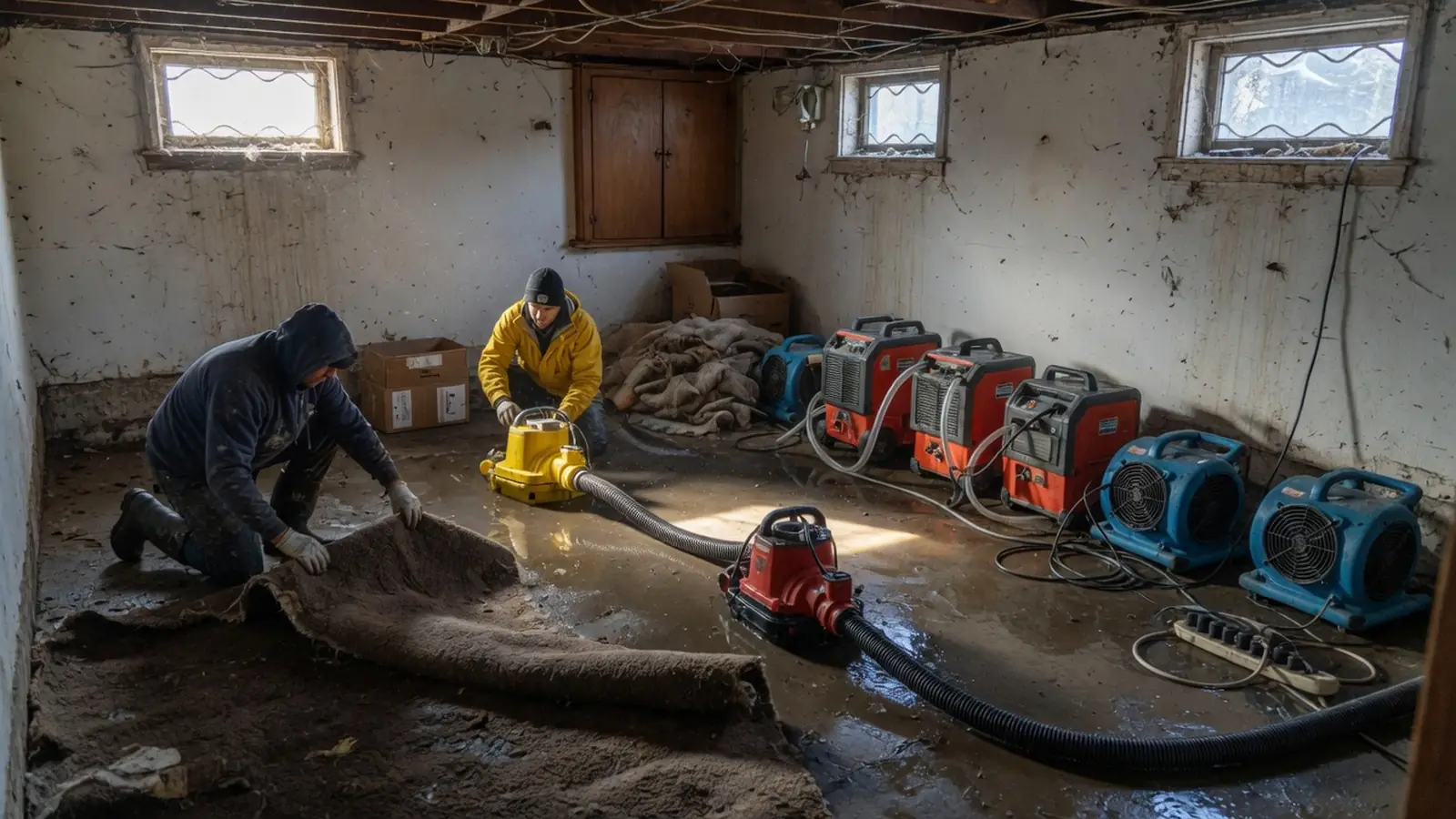
- Rapid Extraction And Bulk Water Removal. Our field crews utilize high-volume truck-mounted extractors to clear standing water, demonstrating how our technicians handle emergency burst pipe repair and storm inundation with equal speed.
- Contaminant Containment And Tear-Out. Storm floodwater carries outdoor silt and street runoff, requiring Category 3 black water protocols with antimicrobial treatment and removal of saturated porous drywall.
- Industrial Dehumidification And Verification. Commercial desiccant dehumidifiers and high-velocity air movers run continuously until structural wood and subfloors reach dry baseline equilibrium.
Our Iron-Clad Restoration Promise
Every storm restoration project adheres strictly to IICRC S500 standards for professional water damage mitigation, integrating certified mold remediation treatments whenever moisture threatens organic building materials. We provide honest photographic documentation and detailed moisture logs directly to your insurance adjuster, ensuring complete transparency with zero inflated charges.
Emergency Floodwater Extraction
Rapid surface pumping and weighted subfloor extraction remove bulk floodwater within hours of storm landfall. Immediate removal stops saturation before moisture wicks upward into interior framing.
Attic And Ceiling Water Recovery
When high winds breach roof decking, saturated blown insulation and sagging ceiling drywall are carefully removed under negative air containment. We dry overhead rafters thoroughly to prevent long-term dry rot.
Structural Cavity Drying And Sanitizing
Injected wall cavity drying systems force warm, dry air into enclosed stud bays without requiring full sheetrock tear-out. Botanical antimicrobials neutralize organic contaminants and stop bacterial proliferation.
Dedicated Disaster Recovery Across The Basin
We maintain dedicated emergency response teams equipped with industrial extraction units, ready to mobilize the moment intense cloudbursts breach residential envelopes.
- 14Zip Codes Served
- 6Service Areas
- 3Services Offered
Verified local feedback from property owners who experienced our rapid storm mitigation and structural restoration.
“The estimate provided before beginning the storm water extraction matched the final invoice to the exact cent. The crew walked through every charge clearly and never tried to slip in surprise fees when our insurance adjuster arrived. That upfront honesty gave my family tremendous peace of mind after such a destructive storm.”
Marcus T.
“What impressed me most was how flush the new baseboards and drywall joints lined up after drying was completed. The team took the time to verify structural framing moisture levels before hanging fresh sheetrock, leaving seams completely invisible under paint. You cannot tell where the storm water cut originally stopped.”
Elena R.
“I already passed their emergency number to two neighbors on our block whose roofs took a beating during the same hail squall. Watching how fast the crew set up drying containment convinced me everyone nearby needed their contact info. Both neighbors called them the next morning and received the identical prompt service.”
Caleb V.
“Pulling back soaked baseboard insulation revealed an old hidden plumbing weep that was rotting an adjacent sill plate. Rather than panicking or halting the job, the crew showed me the issue on their moisture meter, secured the damaged framing immediately, and stayed on schedule. Their calm professionalism turned a stressful discovery into an easy fix.”
Darlene K.
Frequently Asked Questions
How quickly should storm water mitigation begin after severe weather?
Storm water extraction should begin within 24 to 48 hours to prevent pervasive microbial growth and irreversible structural framing deterioration. Delaying extraction allows moisture to wick up drywall and saturate hidden insulation bays, dramatically increasing restoration scope.
Will property insurance cover emergency storm damage restoration?
Most standard homeowner policies cover sudden storm water intrusion, whereas external floodwater typically requires a dedicated flood policy. We provide detailed moisture mapping and itemized loss documentation directly to insurance adjusters to streamline claim approvals.
Why must saturated drywall and insulation be removed after floodwater ingress?
Storm runoff entering from outdoor surfaces is categorized as black water, requiring disposal of porous sheetrock to eliminate pathogens. Non-porous surfaces can be disinfected, but porous materials trap silt and bacteria, creating recurring health hazards if left in place.
How long does the structural dehumidification process usually take?
Thorough structural drying typically takes between three and five days depending on ambient humidity, airflow, and structural materials. Technicians monitor psychrometric readings daily, removing commercial drying equipment only when equilibrium moisture content is achieved.
What steps prevent mold from developing after an attic storm leak?
Immediate extraction of standing water combined with negative air containment and rapid rafter ventilation stops spore germination early. Applying hospital-grade antimicrobial treatments to roof decking and ceiling joists ensures lingering spores cannot colonize hidden structural cavities.