
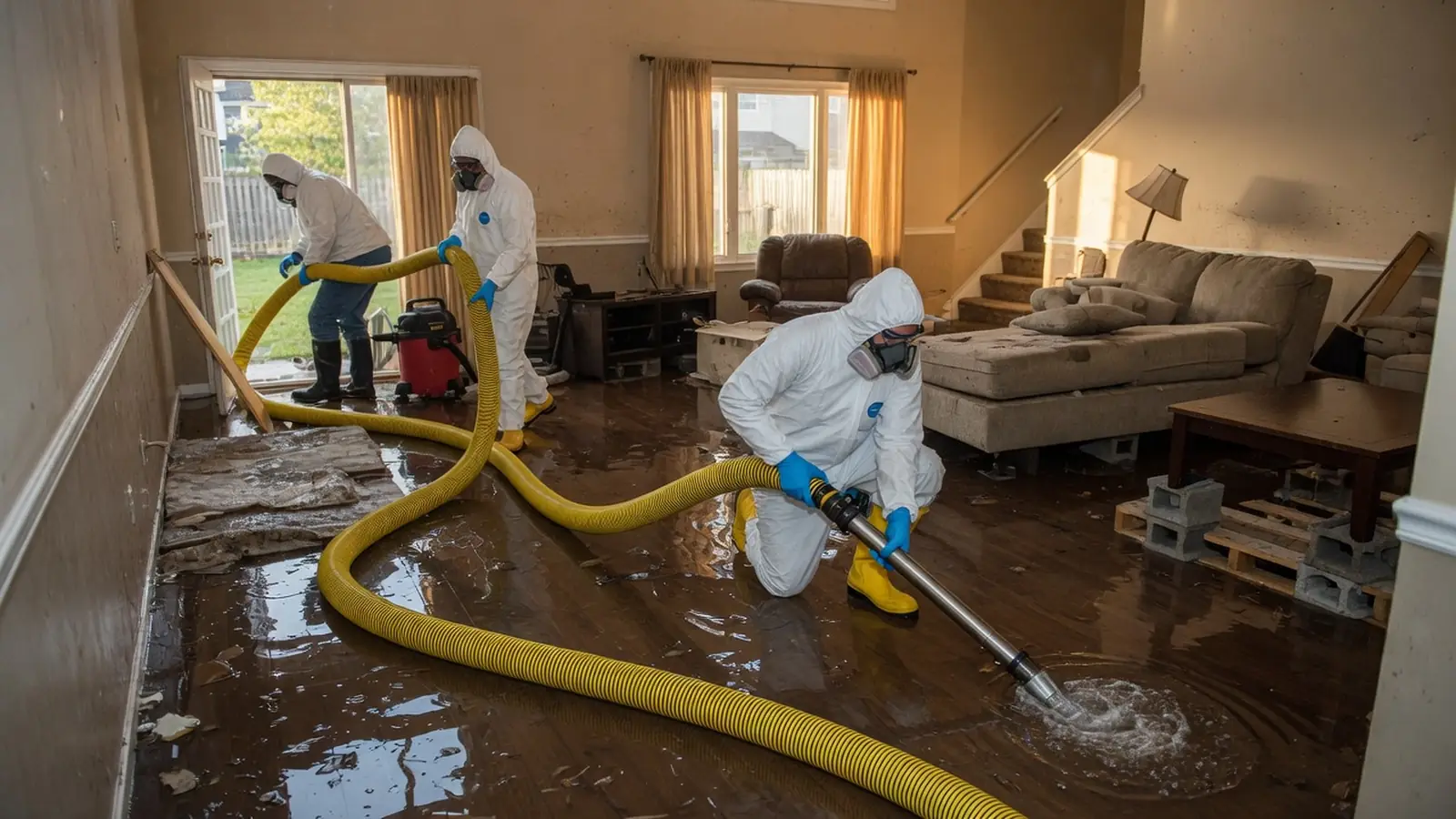
Emergency Water Damage Restoration Odessa TX
Severe thunderstorms frequently compromise exterior building envelopes throughout the region. NOAA radar recorded 1,953 hail signatures within about 15 miles of the metro between 2021-2025 (2021: 430, 2022: 132, 2023: 596, 2024: 308, 2025: 487). Rapid water extraction prevents structural rot and secondary microbial growth.
If water is pouring in, call (432) 555-0169.
Prefer to talk? (432) 555-0169
Proven Regional Extraction Experience
Our restoration technicians bring decades of hands-on mitigation experience handling severe residential and commercial flood events across the region.
About 28% of housing units across the municipality (13,409 of 47,825) were built before 1960, the era of galvanized steel supply lines and cast iron drains.
About 11% of local housing units (5,166 of 47,825) were built in the 1960s, overlapping the years aluminium branch wiring was installed.
About 28% of area housing units (13,497 of 47,825) were built in the 1970s and 1980s, overlapping the years polybutylene supply piping was commonly installed.
About 67% of residential structures here (32,072 of 47,825) were built before 1980, the period when asbestos-containing materials and lead paint were still in use.
When aged plumbing fails inside older crawlspaces, our team isolates the leak and extracts standing water before structural joists rot.
Every project begins with non-invasive thermal imaging and calibrated pinless moisture meters to detect trapped water behind baseboards.
If severe weather compromises your property, you can rely on our crew to mitigate severe storm damage to roof decking and framing.
We maintain clean containment zones with negative air machines and HEPA scrubbers to protect unaffected living spaces from dust and contaminants.
Our transparent customer approach ensures you receive daily moisture tracking logs and straightforward communication from initial extraction to final signoff.
Complete Structural Drying Process
Normally dry West Texas draws, like Midland and Monahans draws, quickly overflow during torrential rains, channeling flash flood runoff into adjacent low-lying structures. Our technicians respond immediately to establish physical barriers and pump floodwater away before foundations shift.
- Emergency Extraction And Pumping. Rainfall rates of 2 to 4 inches per hour quickly exceed local surface drainage capacity, causing rapid roadway pooling and building water ingress within minutes. We arrive on site with high-volume submersible pumps to remove bulk water and stabilize moisture levels before structural framing absorbs standing pools.
- Moisture Mapping And Thermal Scanning. Consecutive days of rain saturate Permian Basin ground, eliminating soil absorption capacity and sharply increasing structural runoff hazards during later storm rounds. Technicians deploy industrial moisture meters and thermal imaging cameras to track hidden moisture traveling through slab perimeters.
- Cavity Drying And Dehumidification. Overnight flash flooding conceals rising floodwaters from property owners, delaying emergency shutoffs and allowing prolonged moisture penetration into wall cavities. We cut precise inspection weep holes and set up commercial dehumidifiers to dry framing studs thoroughly.
- Antimicrobial Treatment And Sanitization. Repeated flash flood warnings across Midland and Ector counties reveal recurring seasonal flood risks from tropical moisture surges rather than rare, isolated events. We apply EPA-registered antimicrobial treatments across all exposed studs and subfloors to prevent persistent spore blooms.
Certified Moisture Mitigation Protocol
We uphold rigorous structural drying standards under the IICRC S500 guidelines for water damage restoration. A pattern echoed in public discussions is that attached garden hoses during freezing temperatures cause outdoor sillcocks to split inside wall cavities, releasing pressurized water behind interior drywall. When sudden failures happen, property owners can schedule immediate burst pipe repair to isolate leaks and protect wall cavities before reconstruction begins.
Storm Damage Water Extraction
The heaviest recent hail year around the regional territory was 2023, with 596 radar hail signatures inside a 15-mile radius. Hail impact fractures shingles and roof flashings, allowing torrential rain to pour directly into attic insulation and ceiling drywall.
Burst Pipe Cleanup And Drying
Prompt emergency water extraction following indoor burst pipe failures is essential to stop moisture migration into drywall and stop secondary mold proliferation. Our rapid response crew removes standing water and sets up desiccant drying systems immediately.
Pressurized Line Break Repair
Pressurized indoor pipe breaks demand immediate isolation and licensed repair to halt ongoing water release before comprehensive drying and restoration can commence. We secure the primary supply shutoff, extract standing floor water, and isolate damaged drywall sections for rapid restoration.
Our Commitment To Rapid Structural Drying
We deploy commercial-grade desiccant dehumidifiers and high-capacity air movers to stabilize residential and commercial properties immediately after moisture intrusion events.
- 9Zip Codes Served
- 6Service Areas
- 3Services Offered
Read verified feedback from property owners who trusted our crew to mitigate serious flood and pipe failures.
“Six months after a broken water heater flooded our hallway, there is zero musty odor and our replacement baseboards look brand new. The crew dried the subfloor completely before signing off on the job. Living through the repair was stressful, but the long-term results gave us complete peace of mind.”
Marcus T.
“Keeping our elderly mother safe while high-volume air movers ran was our biggest worry, but the technicians carefully taped down every cord and maintained a clear walkway to her bedroom. They also made sure our anxious rescue dogs stayed calm by setting up containment barriers that kept the noise isolated. Their thoughtful care during an emergency made all the difference for our household.”
Elena R.
“We initially received a cheaper estimate from a contractor who planned to leave wet insulation inside the lower walls without opening them up. The team explained why trapped moisture behind the drywall would rot the framing studs and insisted on proper cavity extraction. Paying for thorough mitigation saved us from thousands in hidden mold repairs down the road.”
Devin K.
“Navigating city code requirements for plumbing pressure testing seemed daunting until the crew stepped in and coordinated the licensed inspection seamlessly. The municipal inspector passed the repaired line on the very first visit with zero delays. Having seasoned professionals manage the regulatory paperwork took a massive weight off our shoulders.”
Clara M.
Frequently Asked Questions
Will my homeowner insurance policy cover interior ceiling water damage if high wind drives rain beneath the roof shingles during a storm?
Coverage depends on policy terms, but wind-driven rain entering under shingles is usually covered if sudden storm forces caused direct exterior damage. Most standard policies require documenting storm impact promptly, so having our crew generate moisture maps and thermal images helps support your insurance claim.
Why did water suddenly leak through my ceiling during hot summer months?
Attic condensate overflows typically stem from blocked drain lines, allowing water to collect in pans and soak through ceiling drywall. Homeowners often describe how algae clogs inside attic air conditioning drain lines cause primary drain pans to overflow directly onto ceiling drywall, forming heavy water pockets. Prompt extraction prevents ceiling collapse.
How quickly does mold begin to grow after an indoor water pipe bursts?
Microbial mold spores typically activate and spread within twenty-four to forty-eight hours on damp drywall, carpeting, and wood subfloors. Prompt emergency extraction stops moisture migration before spores proliferate, protecting indoor air quality and minimizing structural tear-out.
What are the common signs of hidden water damage inside interior walls?
Key indicators include peeling latex paint, discolored drywall patches, swollen baseboards, and persistent musty smells inside living areas. Because overnight leaks can pool invisibly behind framing, our technicians use infrared imaging to locate hidden dampness without knocking holes in dry walls.
How long does the structural drying and restoration process normally take?
Complete structural drying generally takes three to five days depending on material saturation, ambient humidity, and framing density. Our team monitors daily psychrometric readings and adjusts commercial dehumidifiers until moisture content matches natural baseline equilibrium.